The right dnd dice bag depends on one number: how many dice you carry to the table. A set or a few fit the 4 by 6 inch velvet pouch, which FanRoll sizes to hold multiple dice sets. A stack of sets fits the 6 by 8. A collection needs a compartment bag with separated pockets, which in FanRoll's version holds over 150 standard dice. And if the bag is half the fun, a plush dragon with a zipper swallows the dice whole. Below is how to pick between them, with the one fact that matters for each.
How many dice are you carrying?
Count sets, not dice. A Dungeons & Dragons game uses seven dice types, as the free rules on D&D Beyond lay out, so one set is seven dice and most players own several.
- One set up to a few: a single pouch. The 4 by 6 inch velvet bag has a satin liner and, per its page, holds multiple dice sets.
- A stack of sets: the 6 by 8 inch velvet bag, same liner, more room.
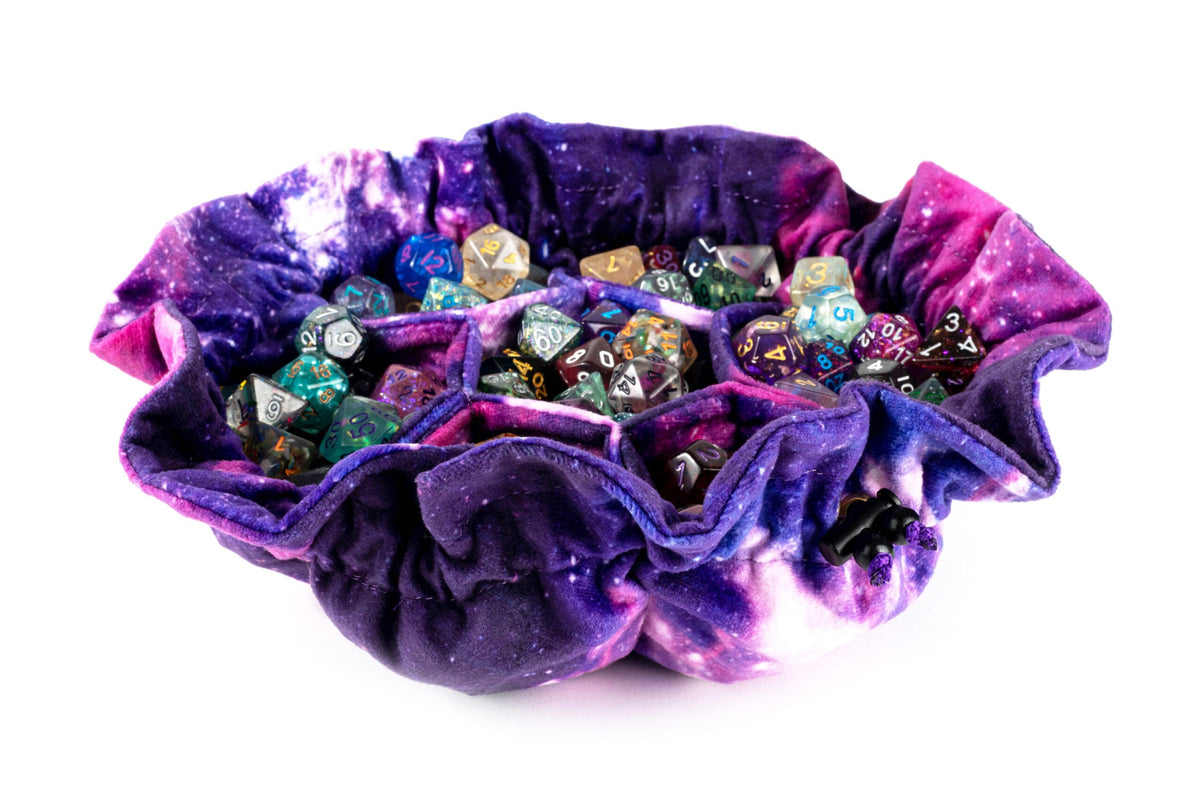
- A collection you want kept apart: a compartment bag. The velvet compartment dice bag has separated pockets and holds over 150 standard dice.
- Dice you want to show off: a dragon plush dice bag, which stores the dice inside the dragon and closes with a zipper.
Shop the full range of dice bags once you know your number; every bag above is there, with the colors and the seasonal versions.

Why a compartment bag beats a bigger pouch
A larger pouch holds more dice, but it holds them together, and sets that travel together trade chips and scratches. The compartment bags solve that with separated pockets, one set per pocket, so a gemstone set never rides against a metal one. FanRoll's Dragon Storm version takes the same idea in a dragon-scale finish with 7 compartments.
That matters most for heavy dice. A metal set weighs about eight times what a resin set does, which the post on how much dice weigh breaks down by material, and the heavy dice are the ones that mark the light ones in a shared pouch. Stone chips, too: gemstone dice belong in their own pocket.
What the velvet pouches are for
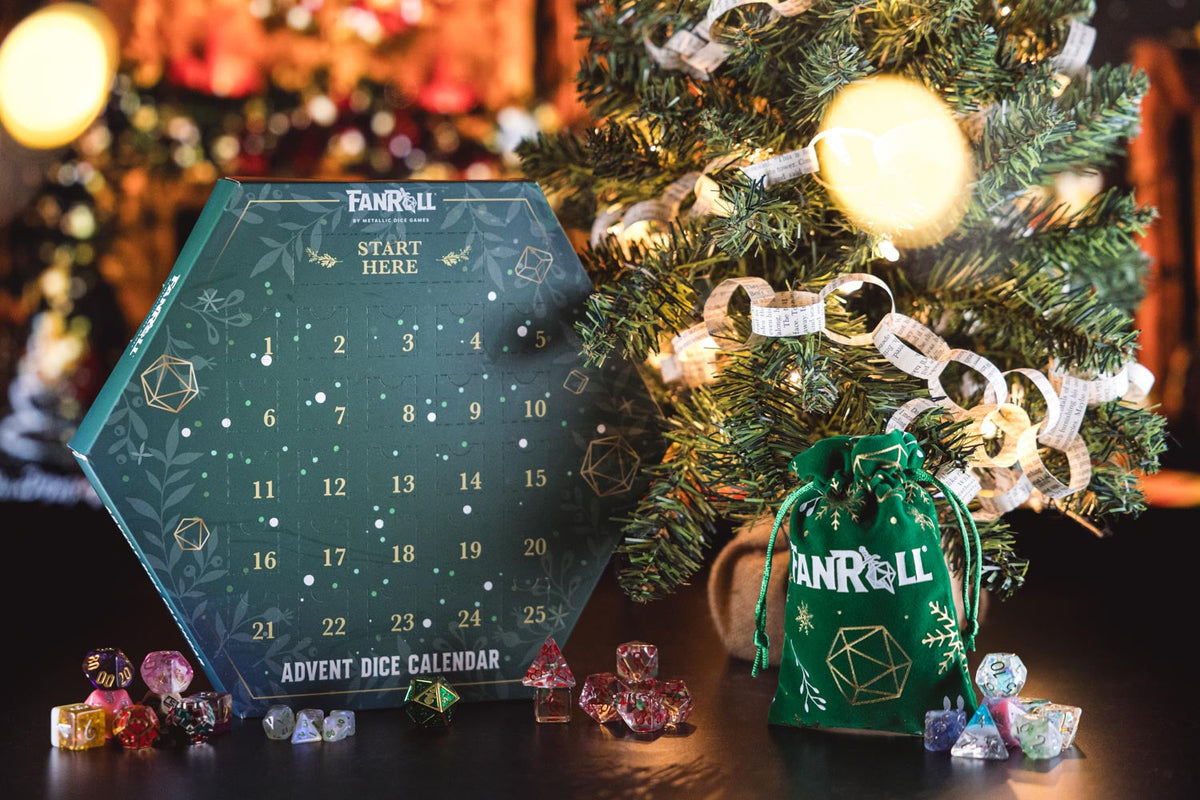
The satin-lined velvet bags are the everyday answer. Velvet outside, satin inside, so the dice slide rather than snag, in two sizes: 4 by 6 inches, which FanRoll says holds multiple dice sets, and 6 by 8 inches for a bigger stack. The snowflake print is the same 4 by 6 bag in a festive version, which is why it turns up in the DnD gift guide every December.
A pouch is also the right bag for mini dice. A 10mm set takes up a fraction of the space, so one 4 by 6 pouch carries several mini dice sets without crowding.
Plush bags: the dragon and the goblin
The plush bags are dice storage that doubles as a table mascot. The dragon plush dice bag comes in several colors and stores the dice inside the body behind a zipper; the Pathfinder dice goblin plush bag does the same for the Pathfinder crowd. They carry a set or two comfortably, so treat them as the bag for the dice you use every session rather than the whole collection; the post on plushie dice bags covers each creature. The plush line's oddest member is the Dice Pooping Dragon, which began as an April Fools' joke.

What to look for in a dice bag
Four things decide whether a bag is still in use a year from now.
- The liner. Velvet outside is common; satin inside is what stops dice from catching on the fabric. FanRoll's pouches are satin lined for that reason.
- Pockets. One pocket per set is the only way to stop materials from rubbing. The compartment bags carry separated pockets; the Dragon Storm bag carries 7.
- The closure. A drawstring pouch opens fast at the table; a zipper, which the plush bags use, keeps dice in when the bag is thrown in a backpack.
- Size in inches, not in dice. FanRoll lists its pouches by size, 4 by 6 and 6 by 8, so measure the pile of sets you own before you pick.
Dice bag or dice case?
A bag protects dice from each other. A case protects them from the drop. If the collection includes sets you never want rolled loose, the dice cases hold them rigid, and the dice scroll in that collection unrolls into a rolling mat with a zipper compartment for the dice, which is a bag and a tray in one. For the table itself, a fold-flat dice tray keeps the rolls where the bag cannot.
Players who want a first set and a bag together can start with the DnD dice range and add the pouch that matches the set's size.

Bags for a club or a shared table
A club dice pool lives in a compartment bag so the sets stay sorted between players, and the pound of mixed dice that a lot of clubs start with fits in one. The post on starting a DnD club covers the rest of the kit, and dice care covers cleaning dice that pass through a lot of hands.
DnD dice bag questions
What is a DnD dice bag?
A pouch or soft container that carries and protects the dice a player brings to a Dungeons & Dragons game: at minimum one seven-piece set, often many. The usual forms are a drawstring velvet pouch, a compartment bag with separated pockets for several sets, and a plush bag shaped like a creature.
How many dice fit in a dice bag?
FanRoll's velvet compartment bag holds over 150 standard dice in its separated pockets, which is more than 20 seven-piece sets. The 4 by 6 inch pouch holds multiple sets according to its page, the 6 by 8 holds more, and a plush bag carries the one or two sets you play with.
Do I need a dice bag and a dice tray?
They do different jobs. The bag carries and sorts the dice; the tray keeps the roll on the table and off a bare surface, which matters for metal and stone. Most players end up with both, and the dice scroll combines them by unrolling into a mat with a zipper pocket for the dice.